NVIDIA's Nemotron 3 Nano Omni: Unified Multimodal Model Revolutionizes AI Agent Efficiency
Introduction
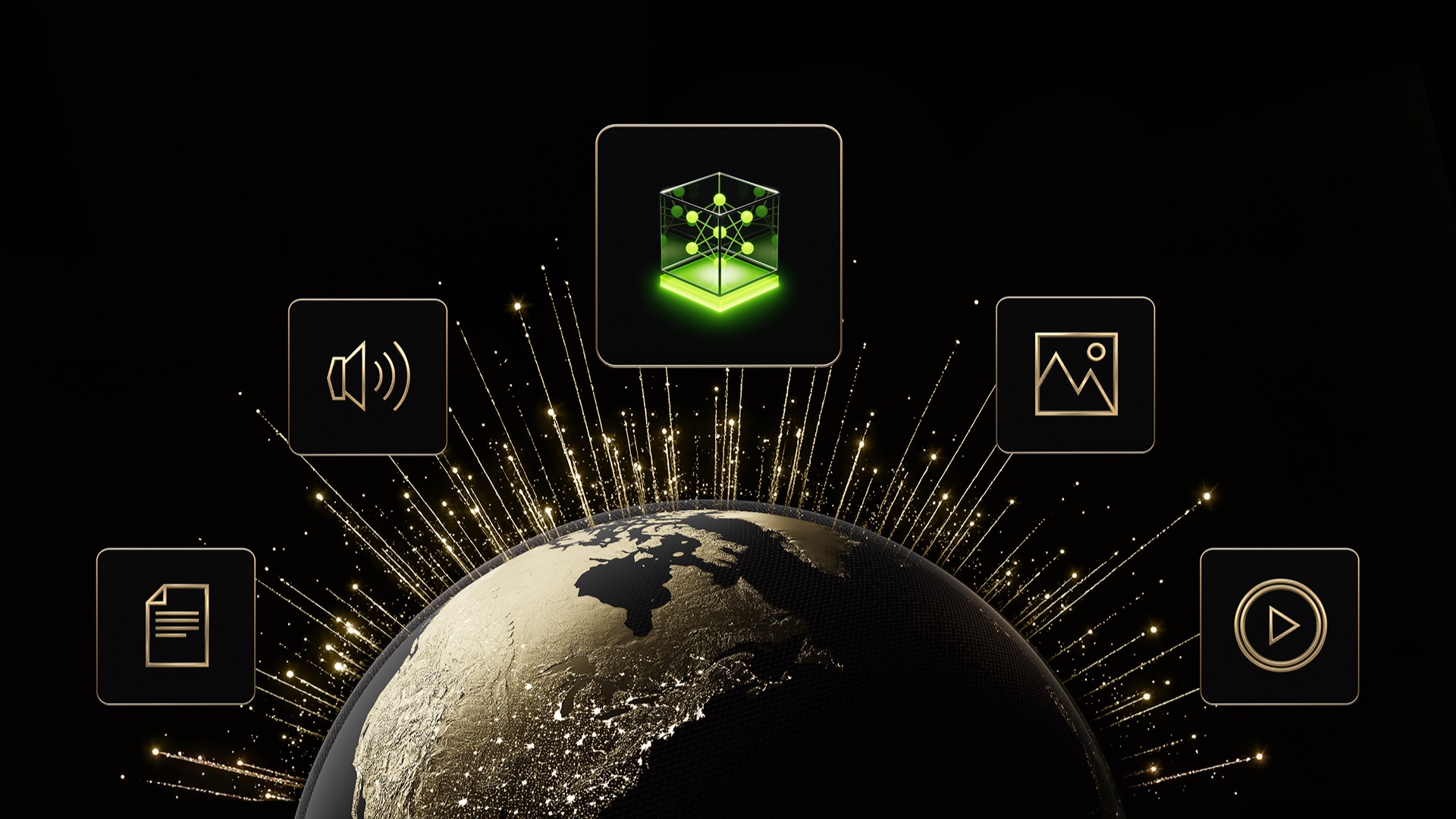
In the rapidly evolving landscape of artificial intelligence, the quest for more efficient and context-aware agents has taken a significant leap forward. NVIDIA's latest release, the Nemotron 3 Nano Omni, addresses a critical bottleneck: the fragmentation of perception across separate models for vision, audio, and language. Traditional AI agent systems rely on multiple specialized models, each processing its own modality and then passing data between them—a process that introduces latency, incurs additional costs, and often loses valuable context. The new open multimodal model is designed to consolidate these capabilities into a single, streamlined system, enabling faster and smarter responses with advanced reasoning across video, audio, images, and text.
What Is Nemotron 3 Nano Omni?
The Nemotron 3 Nano Omni is an open, omni-modal reasoning model that sets a new benchmark for efficiency and accuracy among open multimodal models. It handles inputs from text, images, audio, video, documents, charts, and graphical interfaces, while producing text-based outputs. This makes it particularly well-suited for enterprises and developers building agentic systems that require a reliable “eyes and ears” sub-agent. In a system-of-agents architecture, Nemotron 3 Nano Omni can work alongside larger models like the Nemotron 3 Super and Ultra, or with proprietary models, acting as a fast and precise perceptual front end.
Key Specifications at a Glance
- Model Type: 30B-A3B Hybrid Mixture-of-Experts (MoE) with Conv3D and EVS
- Context Length: 256K tokens
- Input Modalities: Text, images, audio, video, documents, charts, GUIs
- Output Modality: Text
- Availability: April 28, 2026, via Hugging Face, OpenRouter, build.nvidia.com, and over 25 partner platforms
Core Capabilities and Performance
The model excels across multiple dimensions, topping six leaderboards for complex document intelligence, video understanding, and audio comprehension. Its ability to process diverse inputs without fragmenting context is a game-changer. For example, a customer support agent could simultaneously process a screen recording, analyze an uploaded call audio file, and check data logs—all within one model pass. This unified approach dramatically reduces inference overhead and maintains the coherence of information across modalities.
Efficiency Gains
Compared to other open multimodal models with similar interactivity, Nemotron 3 Nano Omni delivers up to 9x higher throughput. This translates into lower operational costs and better scalability without compromising response quality. The model's hybrid 30B-A3B architecture with Mixture-of-Experts (MoE) uses only a fraction of its parameters per inference, optimizing both speed and accuracy.
Architecture and Deployment
Under the hood, Nemotron 3 Nano Omni features a 30B-A3B hybrid MoE design, augmented with Conv3D and EVS (Efficient Vision and Speech) encoders. This allows the model to efficiently ingest video and audio streams alongside traditional text and image inputs. The 256K context window ensures that long documents or extended video sequences can be processed without losing earlier information. Developers can deploy the model on-premises, in the cloud, or at the edge, offering full control over data privacy and customization.
Adoption and Industry Impact
Several AI and software companies have already adopted Nemotron 3 Nano Omni, including Aible, Applied Scientific Intelligence (ASI), Eka Care, Foxconn, H Company, Palantir, and Pyler. Additionally, organizations such as Dell Technologies, Docusign, Infosys, K-Dense, Lila, Oracle, and Zefr are currently evaluating the model. The enthusiasm is palpable among early adopters. Gautier Cloix, CEO of H Company, noted: “To build useful agents, you can’t wait seconds for a model to interpret a screen. By building on Nemotron 3 Nano Omni, our agents can rapidly interpret full HD screen recordings—something that wasn’t practical before. This isn’t just a speed boost: It’s a fundamental shift in how our agents perceive and interact with digital environments in real time.”
Use Cases Across Industries
- Customer Support: Process screen recordings, call audio, and chat logs in one pass for faster, context-aware responses.
- Finance: Parse PDFs, spreadsheets, charts, and voice notes simultaneously to generate comprehensive reports.
- Healthcare: Analyze medical images, spoken consultation notes, and patient records together for more accurate diagnostics.
- Manufacturing: Combine video feeds from cameras with sensor data and maintenance logs to monitor production lines.
Conclusion
NVIDIA's Nemotron 3 Nano Omni represents a significant step forward in the pursuit of lean, fast, and accurate multimodal AI agents. By unifying vision, audio, and language processing into a single high-efficiency model, it eliminates the latency and context fragmentation inherent in multi-model architectures. With its open availability, top-tier accuracy, and dramatic throughput improvements, the model provides enterprises with a practical path to deploy smarter, more responsive agents at scale. As adoption grows, we can expect to see a new wave of applications that leverage true omni-modal understanding without the usual compromises.
Related Articles
- Mastering Java Lists: A Comprehensive Guide to Operations and Best Practices
- Migrating a Configuration Validator to Java for Universal Deployment
- Mastering AI Agent Version Control with Cloudflare Artifacts: A Step-by-Step Guide
- Go 1.26 Arrives with Enhanced Language Features, Performance Gains, and Experimental Tools
- 2025 Go Developer Survey: Key Insights on Developer Challenges, AI Usage, and Documentation Gaps
- Optimizing Go Performance: Stack vs Heap Allocations for Slices
- Python 3.15 Alpha 6 Unleashes Major Performance Boost and New Features
- 10 Lessons from the Kernel-TCMalloc Clash Over Restartable Sequences