NVIDIA and ServiceNow Unleash Next-Generation Autonomous AI Agents for Enterprise Operations
The Evolution from Prompts to Purposeful Action
Enterprise artificial intelligence has matured rapidly. First, it learned to generate text and images; then it mastered reasoning through chains of thought. Now, businesses are pushing for the next breakthrough: AI that can act independently within real-world workflows. Early agent systems showcased the potential—moving beyond simple Q&A to handle multistep tasks. But the real challenge lies in deploying these agents inside enterprise environments, where context, control, and consistency are non-negotiable.
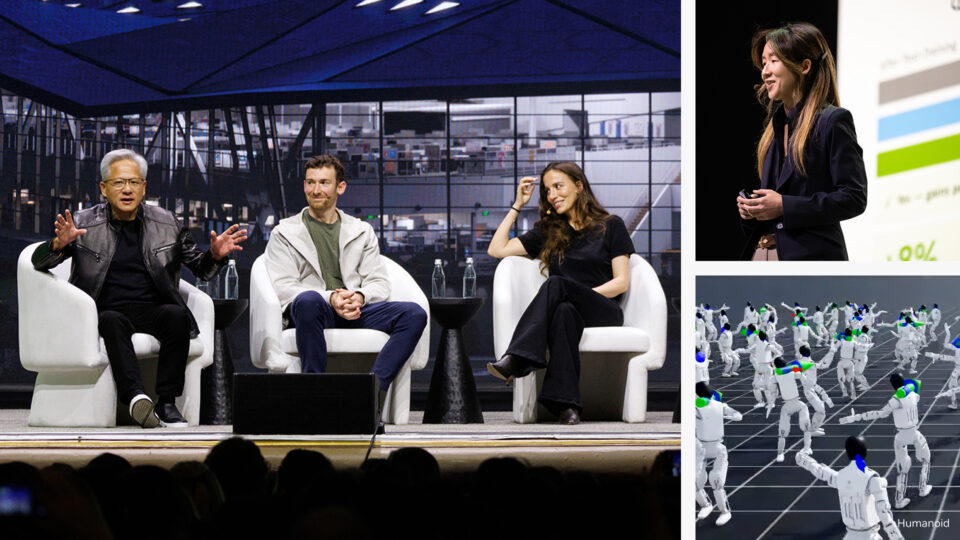
At ServiceNow Knowledge 2026, a major milestone was unveiled. NVIDIA founder and CEO Jensen Huang joined ServiceNow chairman and CEO Bill McDermott on stage to discuss the next phase of enterprise AI. The two companies are expanding their collaboration across the technology stack, delivering specialized autonomous AI agents designed to be both powerful and safe. These agents are fueled by NVIDIA accelerated computing, open models, domain-specific skills, and secure execution software. The enterprise workflow context comes from ServiceNow Action Fabric, while governance is handled by ServiceNow AI Control Tower.
Project Arc: A Self-Evolving Desktop Agent for Knowledge Workers
ServiceNow introduced Project Arc, a long-running, self-evolving autonomous desktop agent built for knowledge workers—including developers, IT teams, and administrators. Unlike standalone AI agents that operate in isolation, Project Arc connects natively to the ServiceNow AI Platform through ServiceNow Action Fabric. This integration ensures every action the agent takes is governed, auditable, and aligned with workflow intelligence.
Project Arc can access local file systems, terminals, and applications installed on a machine. It tackles complex, multistep tasks that traditional automation cannot handle. Yet it operates with the controls enterprises require to deploy AI at scale—such as strict boundaries on what data it sees and which systems it touches.
Three Pillars for Enterprise Autonomous Agents
The design of Project Arc rests on three requirements that every company will need for long-running, autonomous agents:
- Open models and domain-specific skills that can be customized to unique business needs.
- Security that helps agents act without exposing sensitive data or systems.
- All running on AI factories that deliver efficient tokenomics—balancing performance and cost.
This level of autonomy demands control from the very start, not as an afterthought.
OpenShell Secure Runtime: The Foundation of Trust
Project Arc leverages NVIDIA OpenShell, an open-source secure runtime for developing and deploying autonomous agents in sandboxed, policy-governed environments. ServiceNow is not only using OpenShell but also contributing to it, advancing a common foundation for secure, enterprise-grade agent execution.
With OpenShell, enterprises can define exactly what an agent can see, which tools it may use, and how each action is contained. This sandboxing is critical for preventing unintended data leaks or system modifications. "Project Arc represents the next step in our ongoing collaboration with NVIDIA, bringing autonomous execution to the desktop," said Jon Sigler, executive vice president and general manager of AI Platform at ServiceNow. "By combining OpenShell’s runtime layer with ServiceNow AI Control Tower, and powered by ServiceNow Action Fabric, we’re delivering the governance and security that enterprise AI requires."
Open Models and Specialized Skills Scale Enterprise AI
To be effective, enterprise AI systems must be adaptable. NVIDIA and ServiceNow are co-developing domain-specific models that combine NVIDIA's expertise in accelerated computing with ServiceNow's deep understanding of enterprise workflows. These models are built on open foundations, allowing organizations to fine-tune them for their own data, policies, and compliance requirements.
The partnership also extends to the skills layer—pre-built capabilities that agents can use to perform tasks like ticket resolution, code generation, or data analysis. By making these skills modular and reusable, companies can rapidly deploy autonomous agents that fit seamlessly into existing IT, HR, or customer service processes.
What This Means for Enterprise AI
The NVIDIA-ServiceNow collaboration underscores a broader shift: AI is no longer just a conversational tool; it is becoming an active participant in business operations. With Project Arc and the supporting infrastructure of OpenShell, Action Fabric, and AI Control Tower, enterprises can now deploy autonomous agents that are both powerful and controllable. The next wave of enterprise AI will not just answer questions—it will take action, securely and at scale.
Related Articles
- Pixel 11: 10 Crucial Rumors and Concerns You Should Know About
- Bionic Breakthroughs Face Real-World Reality Check: From Lab Demonstrations to Daily Life
- 10 Crucial Insights into Bionic Technology's Real-World Performance
- Anthropic Reverses Ban on OpenClaw: Claude Subscribers Get Agent SDK Credits – But With Strict Limits
- Nvidia and ServiceNow CEOs Push OpenShell as Security Backbone for Autonomous AI Agents
- 10 Essential Strategies for Testing Non-Deterministic Agent Behavior in CI/CD
- WebDriverManager Revolutionizes Java Selenium Automation: Eliminates Manual Driver Management Headaches
- 10 Breakthroughs in Robotic Touch: How DAIMON Robotics Is Redefining Dexterous Manipulation