Balancing Act: Netflix’s Strategy for Fleet Efficiency and Reliability at Global Scale
Introduction
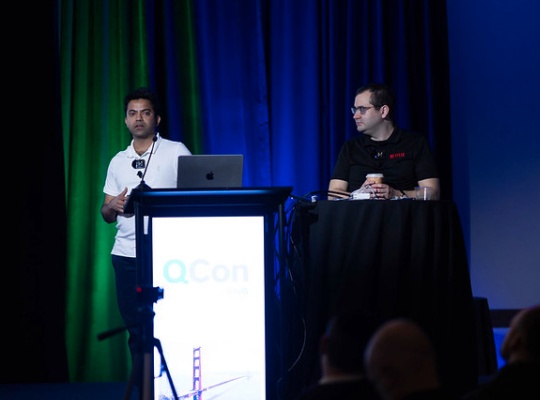
Operating a global streaming service like Netflix means serving millions of users across diverse networks and devices every second. This immense scale introduces a fundamental tension: efficiency (minimizing cost and resource usage) versus reliability (ensuring uninterrupted playback). In a presentation titled “How Netflix Shapes our Fleet for Efficiency and Reliability,” engineers Joseph Lynch and Argha C. revealed how Netflix navigates this trade-off using a sophisticated mental model and a toolkit of proactive and reactive strategies. This article breaks down their approach, showing how the company balances risk, capacity, and performance to keep streaming smooth for subscribers worldwide.
The Efficiency‑Reliability Tension at Scale
At Netflix’s global footprint, even small inefficiencies multiply into massive costs. Yet over‑engineering for reliability can waste resources, while under‑provisioning risks outages during peak demand. The core challenge is that efficiency often demands high utilization, while reliability requires slack to absorb traffic spikes or failures. Traditional metrics like simple CPU utilization fail to capture this nuance: a server running at 90% may be efficient, but leaves little headroom for sudden load. Netflix needed a better way to reason about the value of extra capacity – one that accounts for risk.
A New Mental Model: Risk‑Adjusted Net Value
Lynch and Argha introduced a concept called risk‑adjusted net value (RANV). Instead of aiming for the highest possible utilization, Netflix evaluates the net benefit of a capacity buffer by weighing the cost of idle resources against the potential cost of a reliability incident. This shift moves beyond CPU utilization to focus on capacity buffers – deliberately reserved headroom that can absorb unexpected loads. The RANV formula helps engineers decide how much slack to maintain in different parts of the fleet, aligning efficiency targets with acceptable risk levels. For example, a buffer that reduces the probability of a service‑degrading event by a small percentage may be worth its cost if the incident would have caused widespread playback failures.
Hardware Shaping and Proactive Traffic Steering
Hardware Shaping
Netflix doesn’t treat its hardware as uniform. Through hardware shaping, the team tailors server configurations – CPU, memory, storage – to the specific workload they handle. A server dedicated to transcoding may have different specs than one serving video streams. This refinement improves efficiency by avoiding over‑provisioning, while still ensuring each service has the resources it needs to meet reliability targets.
Proactive Traffic Steering
Before a problem occurs, Netflix uses proactive traffic steering to distribute load intelligently. By monitoring real‑time metrics like latency, loss, and available bandwidth, the system routes users to the most suitable servers and content delivery points. This not only optimizes performance but also prevents any single node from becoming overloaded. The steering decisions are dynamic, adapting to changing network conditions and demand patterns – a key reason Netflix maintains high reliability even during global events.
/presentations/game-vr-flat-screens/en/smallimage/thumbnail-1775637585504.jpg)
Reactive Levers: Hammers and Prioritized Load Shedding
Even with careful planning, unexpected failures happen. Netflix uses two reactive mechanisms to protect critical playback when load exceeds capacity.
Hammers
A hammer is a coarse‑grained tool to instantly shed non‑critical traffic. When a server or region is overwhelmed, the hammer aggressively drops lower‑priority requests (e.g., pre‑roll or background tasks) to preserve resources for video playback. This drastic measure is used sparingly, as it affects user experience, but it’s essential for preventing cascading failures.
Prioritized Load Shedding
More granular than a hammer, prioritized load shedding lets Netflix drop requests based on their importance. Playback initiation (such as “play” button) receives highest priority, while metadata fetches or recommendations may be shed first. By implementing a tiered system, Netflix ensures that the most critical functions – those that directly impact a user’s ability to watch content – are protected even under extreme stress. This approach aligns with the risk‑adjusted net value model: the cost of shedding a low‑priority request is small compared to the cost of a playback failure.
Conclusion: A Continuous Balancing Act
Netflix’s approach to fleet efficiency and reliability is not a one‑time optimization but an ongoing process of measurement, modeling, and adjustment. The risk‑adjusted net value framework provides a clear rationale for capacity buffers, while tools like hardware shaping, traffic steering, hammers, and prioritized load shedding give engineers practical levers to maintain the balance. As the streaming landscape evolves, Netflix will continue to refine these techniques – ensuring that, whether you’re watching a hit series or a live event, the service remains both efficient and reliable.
Related Articles
- Breaking: Apple AirPods Max 2, MacBook Pro, Watch Series 11 Hit Record Lows; Anker Charging Station Slashed $45
- Hulu Surprise Drops 'The Bear' Prequel Episode as Final Season Looms
- Revive Your Wireless Earbuds: The Simple Cleaning Trick That Costs Next to Nothing
- Earbud Performance Declining? A $1 Cleaning Hack Could Restore Them Instantly
- How Spotify Wrapped 2025 Works: The Engineering Behind Your Year in Music
- 10 Technologies Powering Your Spotify 2025 Wrapped Experience
- Apple Slashes Prices: Record Discounts on Watch Series 11, MacBook Air M5, and AirPods Pro 3 – Here's What to Buy
- How to Integrate Agentic Development into Your Workflow: Insights from Spotify and Anthropic