Unraveling the Mystery of Cosmic Rays: Superheavy Particles from Deep Space
Cosmic rays are high-energy particles that constantly bombard Earth from outer space. Some of these particles carry energies millions of times greater than anything our most powerful particle accelerators can produce, yet their exact origins remain one of the biggest puzzles in astrophysics. Recent theories suggest that a 'superheavy secret'—perhaps involving exotic particles or unknown cosmic engines—could unlock a mystery that has baffled scientists for 60 years. This Q&A explores what we know and what we don't about these mysterious cosmic messengers.
What exactly are cosmic rays and where do they come from?
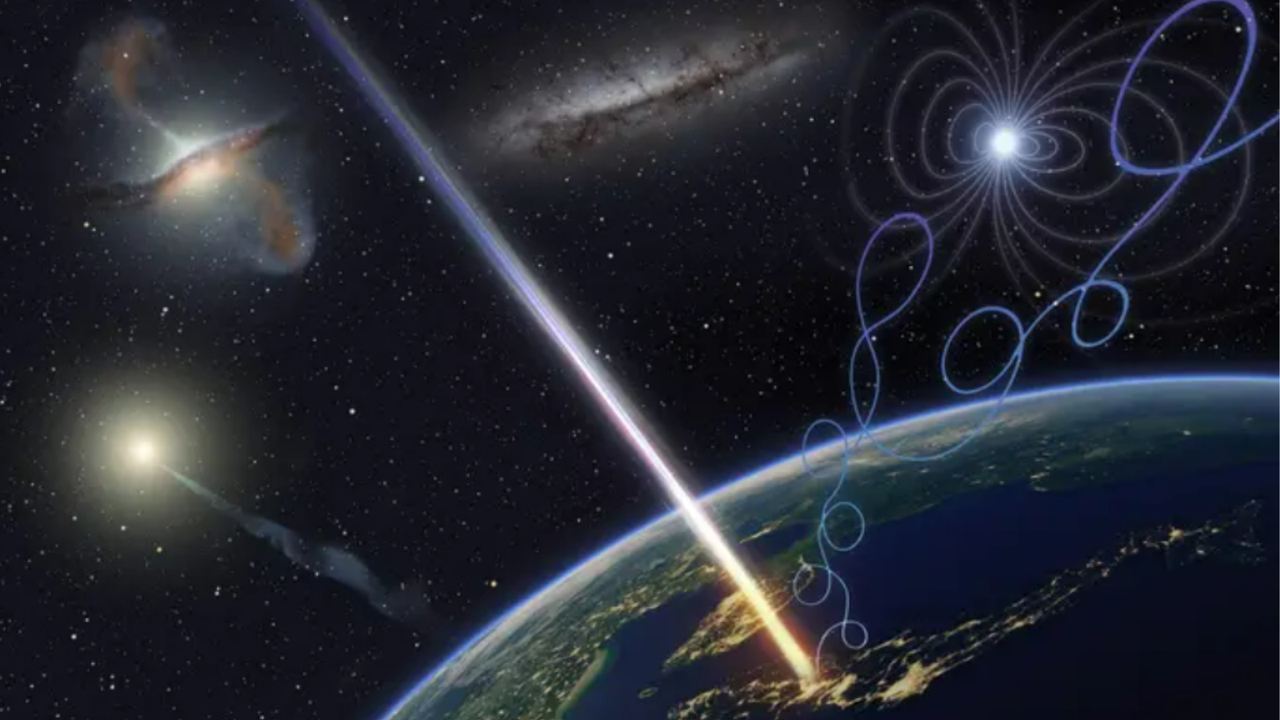
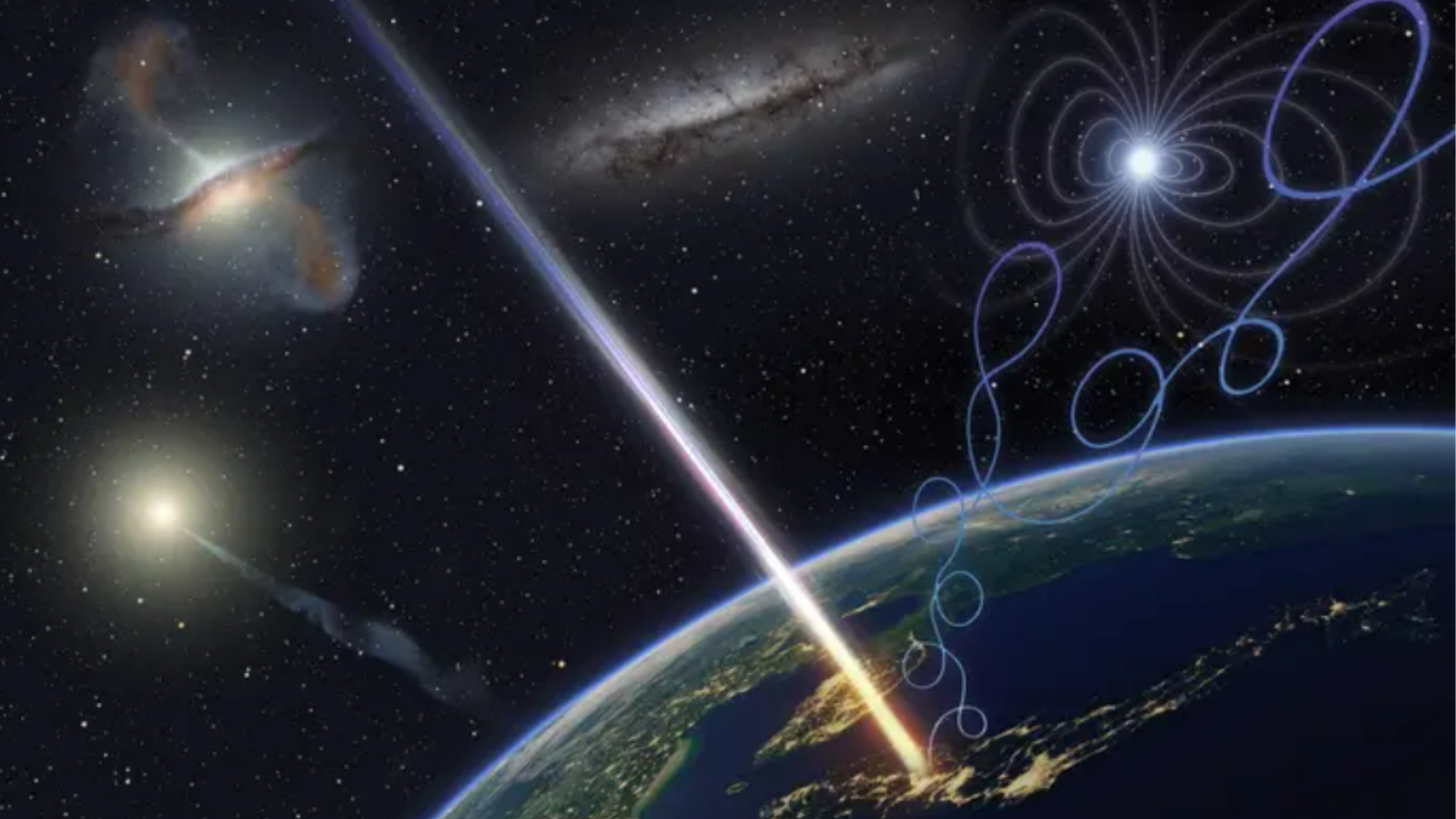
Cosmic rays are not rays but rather high-energy particles—mostly protons and atomic nuclei—that travel through space at nearly the speed of light. They originate from a variety of sources: the Sun produces lower-energy cosmic rays during solar flares, while more powerful ones come from supernova explosions, neutron stars, and active galactic nuclei. The most energetic cosmic rays, however, remain enigmatic. Their arrival directions are not clearly tied to any known celestial objects, suggesting they may come from exotic sources or are bent by magnetic fields. Some may even be remnants of the early universe or decay products of ultramassive particles.
How powerful are high-energy cosmic rays compared to human-made accelerators?
The most energetic cosmic rays ever detected have energies exceeding 10 million times that of particles in the Large Hadron Collider (LHC), Earth's strongest atom smasher. While the LHC reaches about 13 teraelectronvolts (TeV), some cosmic rays have been recorded at over 10^20 electronvolts—a scale known as the Greisen–Zatsepin–Kuzmin (GZK) limit. Such energies are comparable to a baseball moving at 100 kilometers per hour, but packed into a single subatomic particle. This immense power is difficult to explain with conventional astrophysical sources, hinting that new physics may be at play.
What is the 60-year-old puzzle surrounding cosmic rays?
In the 1960s, scientists discovered cosmic ray particles with energies beyond what standard theories predicted. According to cosmic ray propagation models, particles traveling over long distances should lose energy through interactions with the cosmic microwave background. Yet these ultra-high-energy cosmic rays (UHECRs) not only exist but also show no clear pattern linking them to nearby sources. This has become known as the 60-year-old puzzle: where do these impossibly energetic particles come from? Despite decades of observation, no single source has been definitively identified, and their composition remains debated—are they protons, heavier nuclei, or something entirely new?
What is the 'superheavy secret' that may explain these particles?
A leading hypothesis involves superheavy dark matter or exotic relics from the early universe. These hypothetical particles, with masses vastly exceeding the Higgs boson, could decay or annihilate to produce extremely energetic cosmic rays. Alternatively, some theories propose topological defects in spacetime—such as cosmic strings—that release bursts of particles at ultra-high energies. If such a superheavy secret exists, it would not only explain the origin of the most powerful cosmic rays but also provide a window into physics beyond the Standard Model, possibly linking dark matter to the 60-year mystery.
How do scientists detect and study cosmic rays?
Scientists use a combination of ground-based and space-borne detectors. The Pierre Auger Observatory in Argentina, for example, employs thousands of water tanks spread over 3,000 km² to catch secondary particles produced when a cosmic ray hits the atmosphere. Fluorescence telescopes also capture the faint UV glow of air showers. Meanwhile, the Telescope Array in Utah and space missions like the International Space Station's CALET contribute data. By analyzing the shower's size, shape, and particle composition, researchers can infer the primary particle's energy and identity. These observations are crucial for testing hypotheses about superheavy origins and exotic cosmic accelerators.
Could cosmic rays be dangerous to humans or technology?
Most cosmic rays are harmless to humans because Earth's atmosphere and magnetic field shield us. However, astronauts on deep-space missions face increased risks from high-energy particles, which can damage DNA and increase cancer risk. For technology, cosmic rays can cause single-event upsets (SEE) in electronics, leading to glitches in satellites, aircraft, and even computer memory on Earth. Ultra-high-energy cosmic rays are rare but can produce cascades that disrupt sensitive instruments. As we explore space more, mitigating these risks becomes essential, and understanding the nature of these particles helps in designing better shielding and error-correcting systems.
What future research might solve this mystery?
Upcoming observatories like the Observatorio Pierre Auger Expansion and the planned Giant Radio Array for Neutrino Detection (GRAND) will boost sensitivity to the rarest, most energetic cosmic rays. Additionally, the James Webb Space Telescope and the Cherenkov Telescope Array may identify candidate sources by observing gamma rays and neutrinos linked to cosmic rays. Laboratory experiments—such as searching for superheavy particles at the LHC or in dark matter detectors—could provide clues. Combining multi-messenger astronomy (cosmic rays, neutrinos, gamma rays) might finally pinpoint the engines behind these extreme particles, potentially revealing new physics and solving the 60-year-old puzzle.
Related Articles
- Cosmic Silence: Why Haven't Alien Civilizations Reached Earth? The Great Filter Theory Gains Urgency
- 10 Fascinating Facts About the Elusive Universal Gravitational Constant G
- Exodus Alert: 1 in 7 Teachers Won't Return in Fall – Here's Why
- Behind the Scenes: NASA's SpaceX CRS-34 Mission to the ISS
- Shaping the Invisible: The Wireless Innovations of Ana Inês Inácio
- How to Simulate Large Protein Complexes Using Quantum-Centric Supercomputing
- Discovering Beaver Island: A Comprehensive Guide to America's Emerald Isle
- Capcom’s PRAGMATA Blasts Into GeForce NOW on Launch Day — No Console Required