Unlocking Scalable Expertise: How AI Agents Transform Procurement Management
In today's complex supply chains, senior procurement professionals often struggle to apply their deep expertise across hundreds or thousands of suppliers. The original scenario highlights a typical bottleneck: an experienced manager can effectively handle about 200 suppliers, but her company has 2,000. This is where trusted AI agents step in, bridging the gap by capturing and applying human decision-making patterns at scale. Below, we explore key questions about this transformative approach.
1. What core challenge do senior procurement managers face in scaling supplier oversight?
Senior procurement managers possess years of nuanced expertise, enabling them to juggle multiple signals like delivery trends, quality incidents, and contract renewals for a limited set of suppliers. However, the scalability gap becomes glaring: the human capacity for deep analysis typically covers around 200 suppliers, but large enterprises often have 2,000 or more. This mismatch forces tough prioritization decisions—some suppliers get thorough reviews while others are overlooked. The challenge isn’t a lack of knowledge but the inability to replicate that human judgment across every supplier relationship. How can AI help?
2. How can AI agents replicate human expertise in procurement decisions?
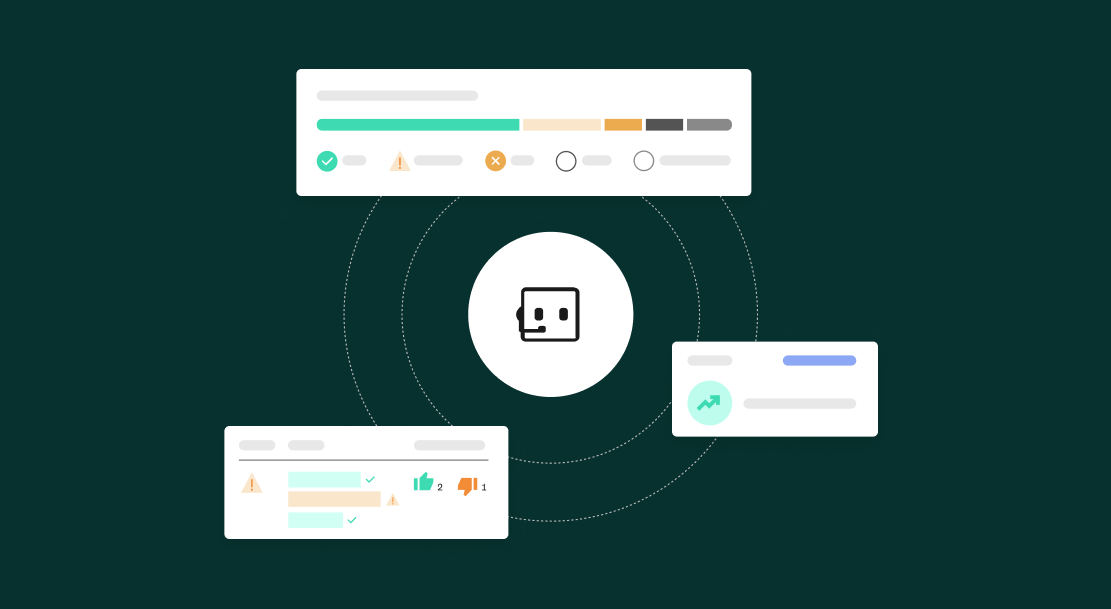
Trusted AI agents are designed to capture decision-making patterns used by experienced professionals. For example, an agent can be trained on historical data of which suppliers the manager requalified, including delivery performance scores, open quality incident counts, and contract renewal dates. The AI doesn't just mimic rules; it learns softer correlations, such as how the manager weighs a plant manager’s tendency to overstate defects versus underreport. By encoding these heuristics into a scalable model, the agent can evaluate all 2,000 suppliers consistently, applying the same expert logic without fatigue or bias.
3. What types of signals do procurement experts analyze that can be automated?
Procurement experts rely on both hard signals and soft signals. Hard signals include quantitative data like delayed shipment percentages, open quality incidents, and upcoming contract expiration dates. These are easily structured and fed into AI models. Soft signals are more subtle, such as which plant manager habitually overstates a defect (inflating severity) and which one underreports issues. Trusted AI agents can be trained to recognize these patterns from unstructured notes, email histories, or even spoken language data, turning tacit knowledge into automated triggers for requalification.
4. How do trusted AI agents handle nuanced human judgments, like plant manager biases?
Nuanced judgments—knowing which plant manager exaggerates defects or downplays problems—are a hallmark of expert procurement. AI agents handle this by learning from past decisions where the expert adjusted for those biases. For instance, if Manager A reports a defect score of 8 but the expert historically discounted it to 5, the AI learns to apply a similar offset automatically. This is achieved through continuous learning and feedback loops. The agent doesn’t just copy numbers; it incorporates the context, historical reliability, and behavioral patterns of each stakeholder, replicating the expert’s calibrated response across all suppliers.
5. What is the gap between human capacity and company-wide supplier needs?
The gap is stark: an expert procurement manager can deeply manage approximately 200 suppliers, while a mid-market manufacturer might have 2,000 active supplier relationships. That leaves 1,800 suppliers receiving minimal attention—their risks, performance issues, and renewal deadlines go unchecked. This gap isn’t due to laziness; it’s a limitation of human time and cognitive bandwidth. Without AI scaling, companies risk missed quality problems, costly contract lapses, and supply disruptions. Closing this gap means bringing the same level of expertise to every supplier, not just the top 10%.
6. How can AI agents prioritize supplier requalification tasks?
AI agents can rank all suppliers by a composite risk score based on the expert’s criteria. For example, they might combine delivery trends (weighted 30%), open quality incidents (40%), contract renewal urgency (20%), and soft signals (10%). The agent then suggests which suppliers need immediate requalification—those exceeding a certain threshold. This mimics the procurement manager’s mental triage but scales to thousands of suppliers. The AI also highlights anomalies, like a supplier with perfect delivery but a sudden spike in defect reports from a known underreporter plant, prompting timely attention.
7. What are the key benefits of integrating AI agents into procurement workflows?
Integrating AI agents brings consistency, speed, and breadth to procurement. Consistency ensures that each supplier is evaluated with the same expert logic, eliminating human fatigue or drift. Speed allows near real-time assessment of all 2,000 suppliers whenever new data arrives. Breadth covers both hard and soft signals, uncovering risks the human might miss due to oversight. Ultimately, these agents augment the human expert, freeing them to focus on strategic decisions like supplier development and negotiation, rather than manual data sifting.
8. How can companies ensure AI agents are 'trusted' in business decisions?
Trust in AI agents comes from transparency, validation, and human oversight. Companies should first involve the expert in training the AI, so it reflects their proven logic. Regular validation—comparing AI recommendations to the expert’s decisions on a test set—builds confidence. Additionally, AI agents should provide explainable outputs, such as showing which factors drove a requalification alert. Finally, humans remain in the loop for final calls, especially for high-risk suppliers. This combination of accuracy, explainability, and human-in-the-loop fosters trust that the AI will scale expertise reliably.
Related Articles
- Your Guide to Trump's New Retirement Savings Plan for Workers Without 401(k)s
- How to Tokenize a Money Market Fund on Ethereum: A Wall Street Blueprint
- Breaking: Australian Outback Ditches Diesel as Renewable Microgrids Surge
- TrickMo Banking Trojan Leverages TON Blockchain for Covert Command Channels in Fresh European Assault
- Crafting a Budget for Australia's Renewable Energy Future: A Step-by-Step Guide
- Crypto Markets Rally as Bitcoin Surges to Two-Month High Amid Regulatory Shifts and Institutional Moves
- 10 Essential Facts About the CSS saturate() Function You Should Know
- Your Ultimate Guide to Exploring El Salvador’s BINAES Library: Books, Bitcoin, and Family Fun in San Salvador