Psyche Mission: Mars Flyby Paves Way for Historic Asteroid Encounter
NASA's Psyche spacecraft, launched in October 2023, is on a six-year journey to explore the metallic asteroid Psyche. Recently, it performed a critical flyby of Mars, using the planet's gravity to slingshot toward its target. This Q&A covers the mission's goals, the Mars maneuver, and what lies ahead.
What is NASA's Psyche mission, and why is it important?
Psyche is a robotic mission to study a unique metal-rich asteroid, also named Psyche, located in the main asteroid belt between Mars and Jupiter. Unlike typical rocky or icy asteroids, Psyche is thought to be the exposed core of an early planet, offering a rare window into the building blocks of our Solar System. Launched from Kennedy Space Center, Florida, aboard a SpaceX Falcon Heavy rocket, the spacecraft uses plasma thrusters to gradually accelerate over its 2.2-billion-mile (3.6-billion-km) journey. By reaching this asteroid by 2029, scientists hope to learn about planetary formation and the metallic cores of worlds, including Earth's own core.
Why did Psyche fly past Mars, and what happened during the flyby?
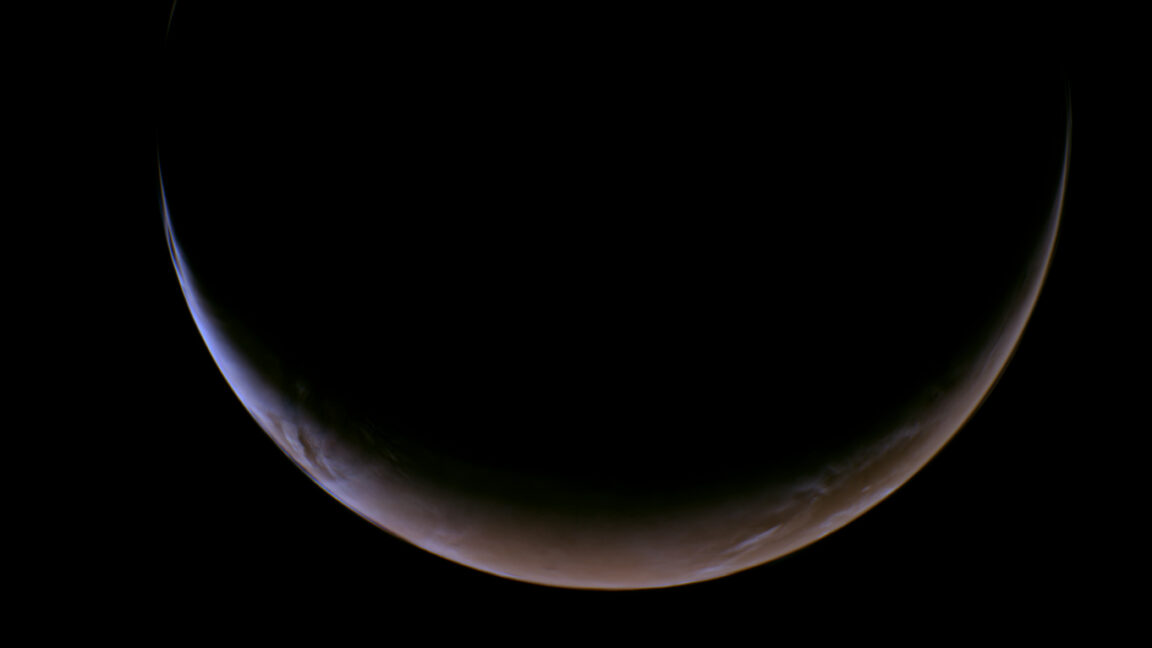
The Mars flyby, executed last Friday, served two purposes: a gravity assist to boost the spacecraft's speed and a dress rehearsal for future operations. Navigators at NASA's Jet Propulsion Laboratory carefully aimed Psyche to pass just 2,864 miles (4,609 km) above the Martian surface—safely above its thin atmosphere. During the encounter, the spacecraft used Mars's gravitational pull to slingshot itself, gaining enough momentum to reshape its orbit around the Sun. This maneuver was crucial for setting a course that will intercept asteroid Psyche in 2029. The flyby also allowed the team to test imaging and science instruments, ensuring readiness for the main event.
How did the spacecraft get to Mars, and what propulsion does it use?
After its launch in October 2023, Psyche relied on a powerful SpaceX Falcon Heavy rocket to escape Earth. However, the spacecraft's primary propulsion comes from four plasma thrusters that use solar electric propulsion. These engines ionize xenon gas and expel it at high speeds, producing steady, low thrust over long periods. While this method is far slower than chemical rockets in the short term, it is incredibly efficient, allowing the spacecraft to gradually increase velocity over months and years. This approach saved fuel and mass, enabling the mission to travel the vast distance to the asteroid belt. The Mars flyby provided an additional speed boost without expending propellant.
When will Psyche reach its target asteroid, and what will it study?
Psyche is scheduled to arrive at the metal asteroid Psyche in 2029, after a journey of roughly six years. Once in orbit, the spacecraft will spend about 21 months studying the asteroid's surface, composition, and magnetic field. Using a suite of instruments, including a multispectral imager, a gamma-ray and neutron spectrometer, and a magnetometer, NASA wants to confirm whether Psyche truly is a planetary core. Key questions include: Is the asteroid mostly iron and nickel? Does it show evidence of a once-molten interior? How did such a body form and survive? The data will shed light on the violent early history of our solar system.

What challenges does the Psyche mission face during its long journey?
Traveling 2.2 billion miles (3.6 billion km) through deep space poses numerous hurdles. The spacecraft must endure extreme temperature swings, radiation, and micrometeoroid impacts. Its solar panels, though massive, must work at lower efficiencies far from the Sun. Communication delays increase as the probe moves farther away—signals take up to 30 minutes to reach Earth. The Mars flyby itself required precise navigation: any error could have sent Psyche off course. Additionally, the plasma engines must operate almost continuously for years, raising the risk of hardware degradation. The mission team monitors health constantly and prepares contingency plans for any anomalies.
How does this Mars flyby compare to other gravity assist maneuvers?
Gravity assists are a common technique in deep-space missions—as used here—but each is unique. For Psyche, the Mars encounter was relatively close (about 2,864 miles altitude), which maximized the velocity change. In contrast, missions like Curiosity or Perseverance used Mars for landing, not a slingshot. The Voyager probes used multiple planetary flybys to achieve escape velocity from the Solar System. Psyche's flyby was especially critical because the spacecraft's low-thrust plasma engines cannot produce sudden maneuvers; gravity assists provide the needed trajectory change efficiently. This particular boost reshaped Psyche's orbit so it can cross the asteroid belt precisely in 2029, a feat that would have required far more propellant otherwise.
What have scientists learned from the Psyche Mars flyby so far?
Even though the primary goal was trajectory adjustment, the flyby also returned new data and images of Mars. The spacecraft's cameras captured unfamiliar views of the Red Planet from a unique perspective, including potential surface features and atmospheric details. This serves as a calibration opportunity: the same instruments will later study asteroid Psyche's surface. Engineers are analyzing the spacecraft's performance during the high-speed pass, checking thermal and navigation systems. Early results confirm the spacecraft is healthy and the plasma thrusters are functioning as expected. These findings give the team confidence as Psyche continues its long journey toward the metal world.
Related Articles
- 7 Fascinating Facts About the Ucayali River Seen from Space
- 10 Fascinating Facts About the Spiral Galaxy NGC 3137
- Blue Origin's Endurance Moon Lander: Key Q&A on Its NASA Vacuum Chamber Testing
- How to Secure AI Partnership Deals with the US Military for Classified Systems
- 10 Surprising Truths About Google's Fitbit Air: Comfort, AI Quirks, and the Future of Fitness Tracking
- 7 Ways Diskless Databases Overcome the Storage Bottleneck
- SpaceX Reaches New Milestone: Starship V3 Stacked and Fueling Test Completed for 12th Flight
- How to Assess the Atlantic Meridional Overturning Circulation (AMOC) Tipping Risk: A Step-by-Step Guide