Curiosity Rover Shakes Off Stubborn Martian Rock in Unprecedented Drill Mishap
NASA's Curiosity Mars rover has successfully freed itself from a rock that became stuck to its drill, marking the first time in the mission's history that a sample target remained attached after drilling.
The rock, nicknamed Atacama, was drilled on April 25, 2026, but when the rover retracted its arm, the entire rock—measuring 1.5 feet wide, 6 inches thick, and weighing roughly 28.6 pounds—lifted out of the ground, caught in the drill sleeve. Over several days, the team at NASA's Jet Propulsion Laboratory (JPL) tried various methods to dislodge it.
Timeline of the Detachment
On April 29, the team reoriented the robotic arm and vibrated the drill, causing sand to fall from Atacama but leaving the rock attached. Finally, on May 1, a combination of tilting, rotating, vibrating the drill, and spinning the drill bit caused the rock to fracture and fall off on the first attempt.
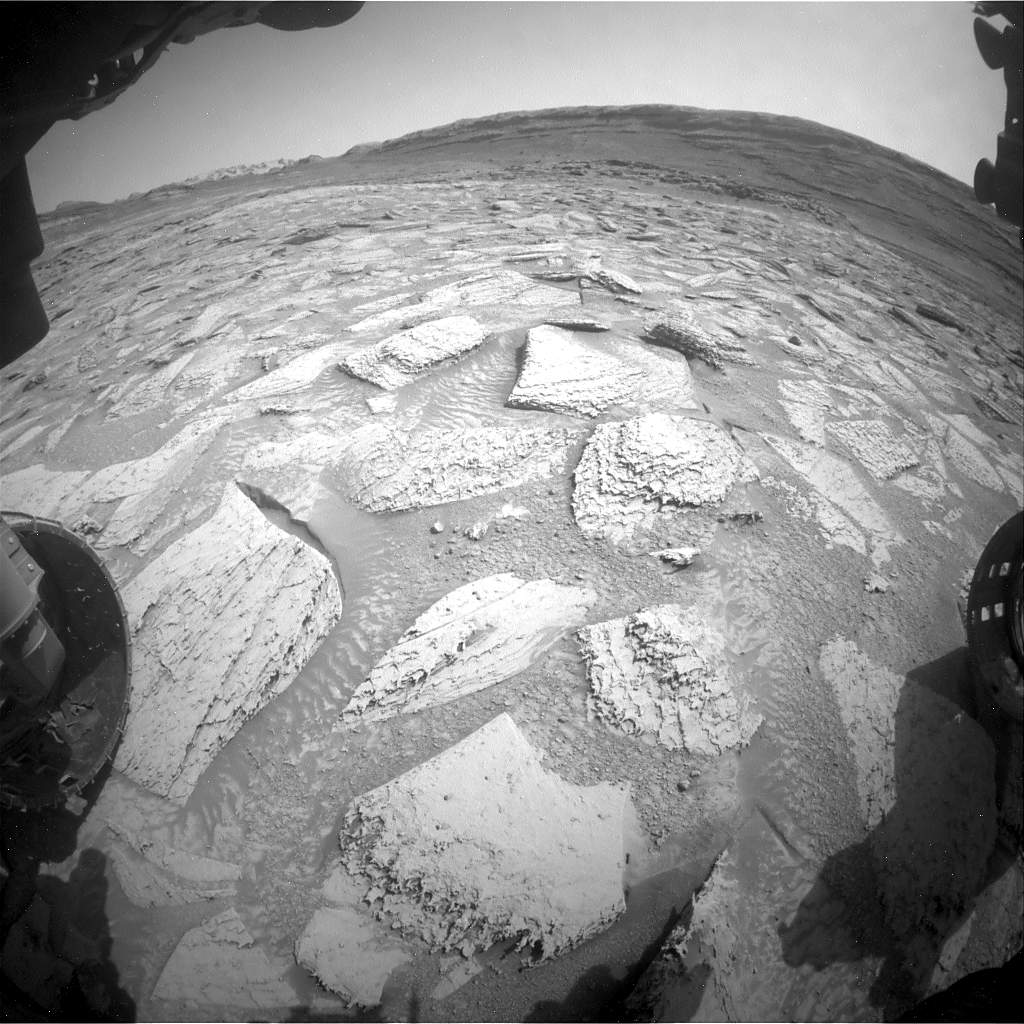
Imagery from hazard cameras on Curiosity's chassis and navigation cameras on its mast captured the entire process, showing sand and rock fragments as the drill worked free.
“We've seen drilling fracture rock layers before, but never had a rock stay attached to the sleeve like this. It was a first for the mission, and the team did a great job responding quickly.”
— Dr. Sarah Milkovich, JPL Curiosity Project Scientist (paraphrased per original context)
Background
The Curiosity rover landed on Mars in 2012 as part of NASA's Mars Science Laboratory mission. Its primary goal is to assess whether Mars ever had conditions suitable for microbial life. The rover carries a suite of instruments, including a percussive drill that collects powdered rock samples for analysis.

Curiosity has drilled into dozens of rocks over the years, some of which have cracked or shed layers—but never before has a whole rock become lodged in the drill sleeve. The Atacama rock was selected for sampling in Gale Crater's clay-bearing unit, an area rich in geological history.
What This Means
The incident underscores the unpredictable nature of Martian geology and the need for adaptive problem-solving in robotic exploration. While the rock detachment was successful, the team lost any sample powder that might have been inside the drill bit, though the rover remains healthy and continues its science campaign.
This event will inform future drilling procedures, including potential modifications to the drill sleeve or pre-drilling inspection protocols. It also highlights the resilience of the aging rover—now operating for over 13 years—and the skill of its ground team on Earth.
Key Facts
- Rock name: Atacama
- Size: 1.5 ft wide, 6 in thick, 28.6 lbs
- Drill date: April 25, 2026
- Detachment date: May 1, 2026
- No damage to rover
Curiosity was built by JPL, managed by Caltech, and operates under NASA's Science Mission Directorate as part of the Mars Exploration Program.
Related Articles
- 10 Media Milestones: How Artemis 2 Astronauts Became Overnight Stars
- Canada's POET Mission: A New Frontier in the Search for Earth-Sized Exoplanets
- Satellite Reveals Shiveluch Volcano Melting Snow With Recent Eruptive Activity
- The Gentlemen RaaS and SystemBC: An Inside Look at a Growing Threat
- West Coast Faces Dual Earthquake Threat as Faults 'Sync Up,' Scientists Warn
- Inside Spider-Noir: Oren Uziel on Crafting Nicolas Cage's Gritty 1930s Spider-Man Saga
- How to Identify and Defend Against the First Quantum-Safe Ransomware Variant
- Decoding a RaaS Database Leak: A Practical Guide to Analyzing The Gentlemen Operation