Meta Engineers Reveal Surprising Discovery Behind 'Friend Bubbles' Feature That Scaled to Billions
Meta Launches Friend Bubbles for Reels
MENLO PARK, CA — Meta has officially rolled out Friend Bubbles, a new feature that highlights Reels your friends have watched and reacted to. What appears to be a simple social discovery tool actually required deep engineering to work at billion-user scale.
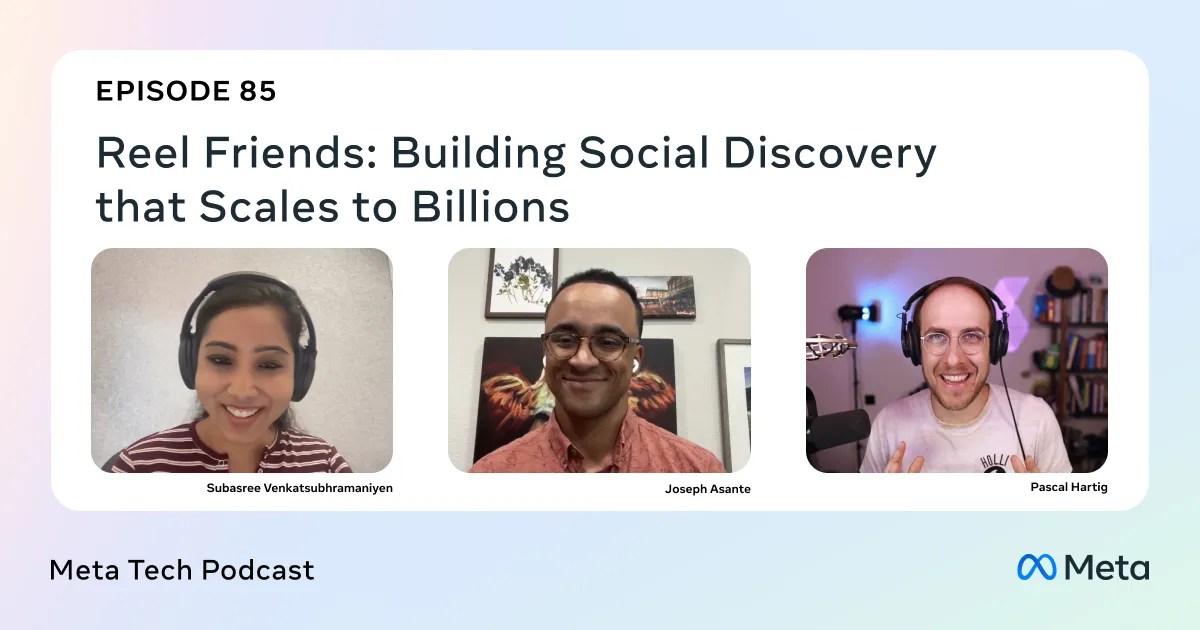
"On its face the new Friend Bubbles feature looks simple enough," said Pascal Hartig, host of the Meta Tech Podcast. "But sometimes the features that seem the most straightforward require the deepest engineering work."
Background: The Evolution of Friend Bubbles
In a recent episode of the Meta Tech Podcast, Hartig interviewed two software engineers from the Facebook Reels team — Subasree and Joseph. They detailed the machine learning model evolution behind Friend Bubbles, including different behaviors between iOS and Android users.
"We had to reimagine how social signals propagate across billions of users," Subasree explained. "Android users showed a subtle difference in engagement patterns that initially broke our model."
The Breakthrough Discovery
The engineers revealed a surprising discovery that finally made the feature click. "We realized we were weighting friend reactions too heavily," Joseph said. "Once we adjusted for the recency and context of those reactions, the feature started scaling beautifully."
That adjustment allowed Friend Bubbles to process real-time social graphs across both iOS and Android seamlessly. The team noted that the feature now handles billions of recommendations daily.

What This Means for Social Discovery
Friend Bubbles represents a new paradigm in social product design — turning passive consumption into active discovery through friend signals. Meta now plans to expand the model to other surfaces within Facebook and Instagram.
Joseph added, "This isn't just about Reels. The underlying architecture could power any social discovery feature where you want to know what your friends are engaging with."
iPhone vs. Android Behavior
The team discovered that iPhone users tend to react to Reels more publicly (likes, comments) while Android users favor private reactions (saves, shares). The model had to learn separate patterns for each ecosystem.
Listen to the Full Episode
You can find the Meta Tech Podcast episode "Reel Friends: Building Social Discovery that Scales to Billions" on Spotify, Apple Podcasts, and Pocket Casts. Send feedback to Meta on Instagram, Threads, or X.
For those interested in engineering careers, visit the Meta Careers page.
Related Articles
- Putting Customers First: How Customer-Back Engineering Drives AI Breakthroughs
- 6 Game-Changing Insights About Fin Operator: The AI Agent That Manages Your AI Agent
- Mastering the Airversa QliQ: A Complete Guide to Your Rechargeable Thread Smart Button for Apple Home
- May 2026 Patch Tuesday: AI Tools Uncover Record Vulnerabilities Across Major Software
- Why Your Windows 11 Update Won't Show the New Xbox Mode: Troubleshooting Guide
- How to Drive AI Breakthroughs with a Customer-Centric Engineering Approach
- How to Build a Statewide EdTech Vetting System: A Step-by-Step Guide for Advocates
- Unlock Complex Problems: 6 Essential Insights About HASH Simulation Platform